Result-Driven Solutions

Cost & Time Savings

Unrivaled Support

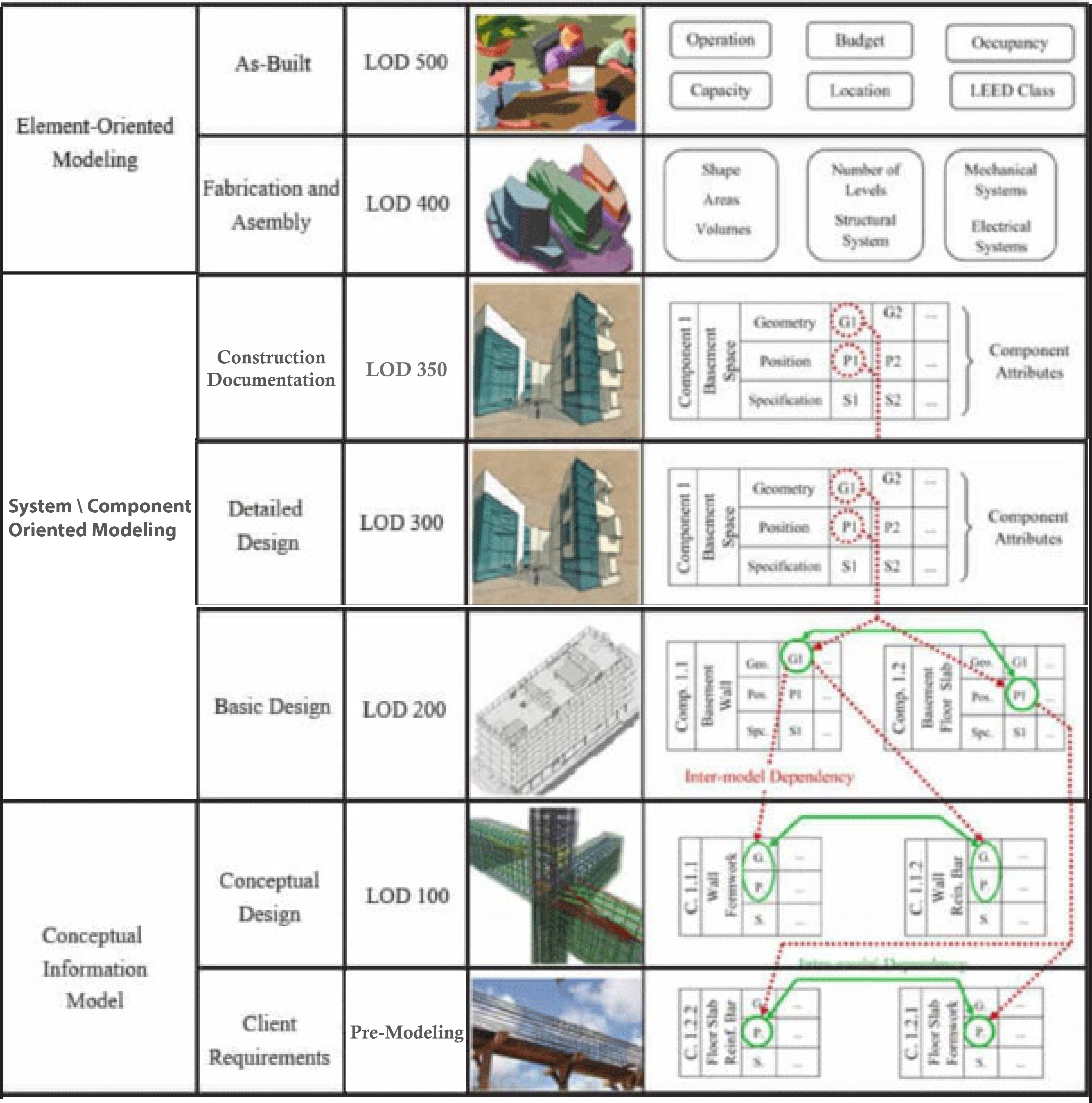
The Level of Development (LOD) specification is a reference that enables practitioners in the AEC Industry to specify and articulate with a high level of clarity, the content and reliability of Building Information Models (BIMs) at various stages in the design and construction process.
The LOD Framework addresses various issues faced by AEC professionals by providing an industry-developed standard to describe the state of development of various systems within a BIM. This standard enables consistency in communication and execution by facilitating the detailed definition of BIM milestones and deliverables.
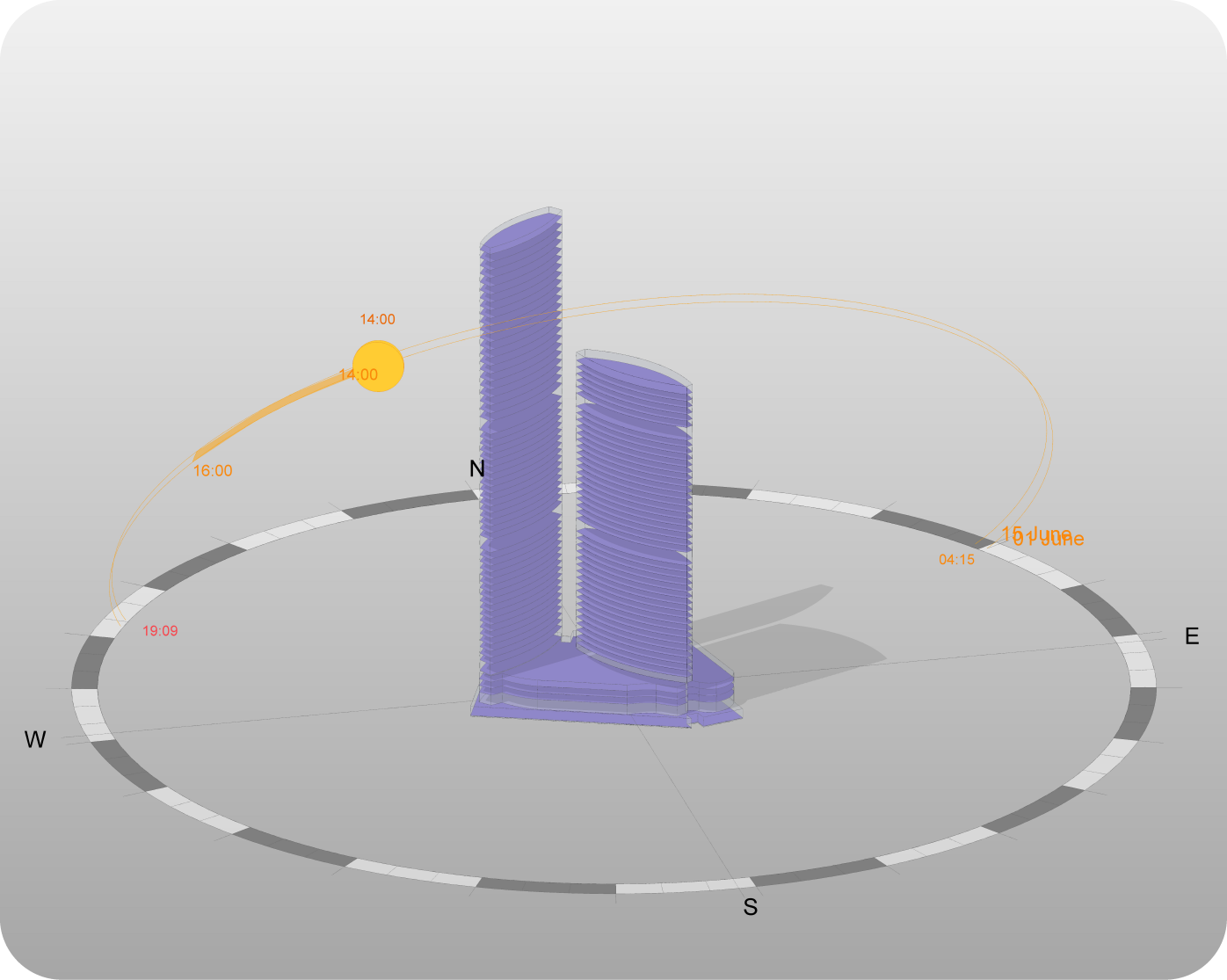
At LOD 100, the BIM model represents the project in its most basic form, using simple geometric shapes. This level focuses on initial concepts and overall project feasibility, providing a foundational understanding of the design intent.
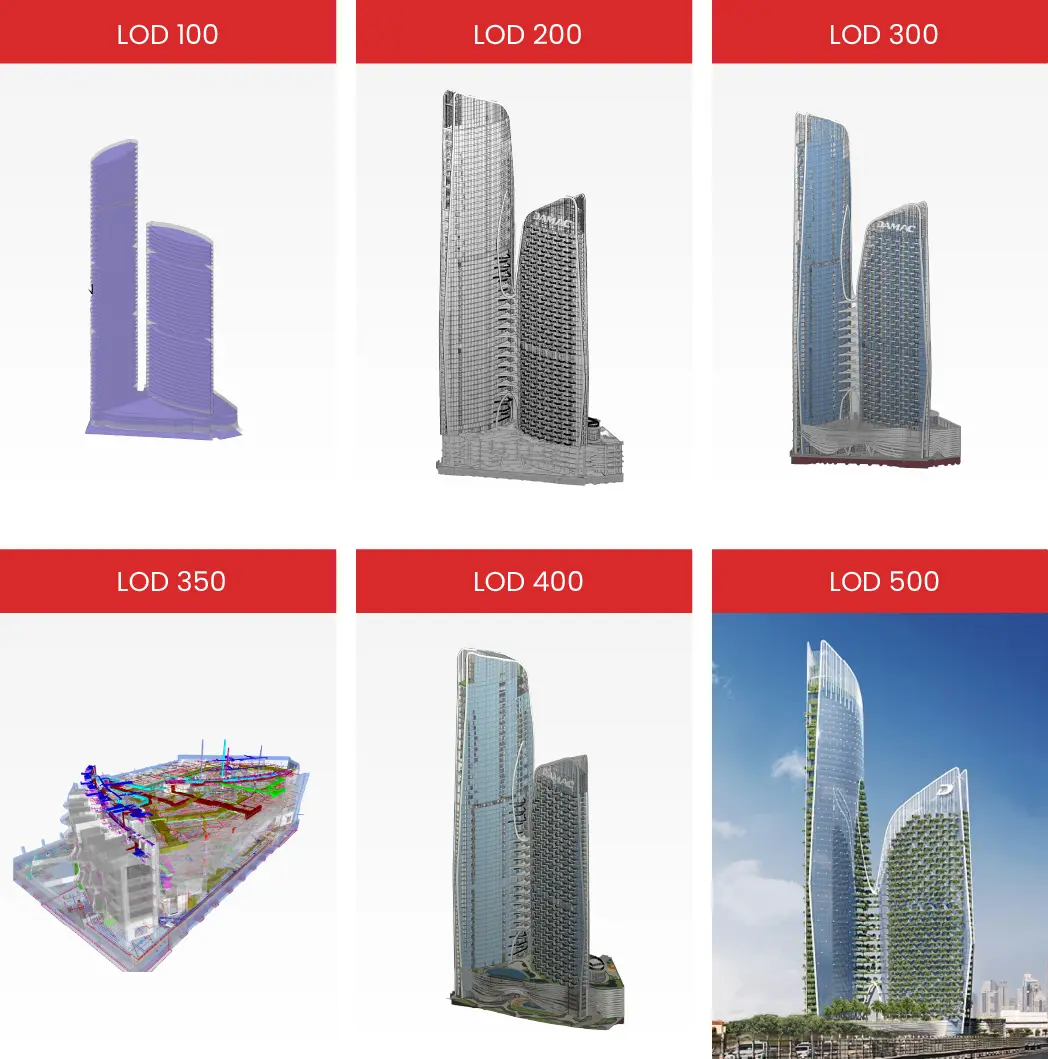
Level of Development (LOD) defines how developed and reliable a model element is for coordination, quantities, fabrication, or construction at a given stage. It is not just visual detail. It’s about whether you can trust that element to make decisions.
Level of Information (LOI) defines the data behind the geometry. Specifications, performance criteria, cost, supplier details, codes, and asset information.






| MODEL CONTENT | LOD 100 | LOD 200 | LOD 300 - LOD 350 | LOD 400 | LOD 500 |
|---|---|---|---|---|---|
| 3D Model-based Coordination | Site level coordination | Major large object coordination | General object-level coordination | Design certainty coordination | N/A |
| 4D Scheduling | Total project construction duration. Phasing of major elements | Time-scaled, ordered appearance of major activities | Time-scaled, ordered appearance of detailed assemblies | Fabrication and assembly detail including construction means and methods (cranes, man-lifts, shoring, etc.) | N/A |
| Cost Estimation | Conceptual cost allowance Example $/sf of floor area, $/hospital bed, $/parking stall, etc. assumptions on future content | Estimated cost based on measurement of the generic element (i.e. generic interior wall) | Estimated cost based on measurement of specific assembly (i.e. specific wall type) | Committed purchase price of specific assembly at buyout | Record cost |
| Program Compliance | Gross departmental areas | Specific room requirements | FF&E, casework, utility connections | N/A | N/A |
| Sustainable Materials | LEED strategies | Approximate quantities of materials by LEED categories | Precise quantities of materials with percentages of recycled and/or locally purchased materials | Specific manufacturer selections | Purchase documentation |
| Analysis/Simulation | Strategy and performance criteria based on volumes and areas | Conceptual design based on geometry and assumed system types | Approximate simulation based on specific building assemblies and engineered systems | Precise simulation based on the specific manufacturer and detailed system components | Commissioning and recording of measured performance |
The Level of Development (LOD) in BIM refers to the extent of detail and accuracy in a building model at various stages of a project's lifecycle. It provides a standardized framework for defining how much information is included in the model elements, from conceptual design through construction and beyond. LOD ranges from basic geometric shapes (LOD 100) to highly detailed components with precise specifications and data (LOD 500).
BIM LOD (Level of Development) is not just about adding detail, it directly impacts coordination and rework because higher LODs provide more accurate, discipline-specific information that reduces clashes and misinterpretations. In practice, LOD helps define how reliable the model elements are for design, coordination, and construction.
We implement LOD by delivering precise 3D models across all stages (LOD 100–500), ensuring accurate detailing, coordination, and documentation for design and construction. our approach aligns with industry standards to improve collaboration.
We work from LOD 300 to LOD 500 in modelling, coordination, and shop drawings.
LOD is Level of development - Like modelling (3D) LOI is level of information - is data driven eg. COBIE data, cost estimation, scheduling etc
Yes, especially at higher level of LOD like 400,500 as its modelled with exact dimensions, materials and specifications.
Architecture firms and construction General contractors, Sub contractors benefit from outsourcing as it saves time during the detailed drawing phase. They gain access to skilled BIM consultants who can handle complex models, further reducing time and effort. Outsourcing also ensures accurate LOD models for fabrication and coordination. Any missed details are identified early, and these precise models help save money by minimizing mistakes and reducing costly rework.